In this article, you’ll learn:
- Introduction
- Why should seniors consider high-intensity workouts
- What are high intensity workouts for seniors
- Benefits of high-intensity workouts for older adults
- How can you get started
- What exercises are best for seniors
- Common concerns about high intensity workouts
- Tips for staying safe during high intensity workouts
It is, therefore, important to remain physically active as we work our way into old age. While using high intensity workouts for seniors may seem like a difficult endeavor, it is for many reasons a perfect means of keeping seniors strong, helping hearts be healthy and improving the quality of life for seniors. Thinking whether you or your family members can endure these workouts? So let’s go straight to learning more about how those who are Classed 60 and above can exercise and get to incorporate HIIT.
Why should Seniors Consider High-Intensity Workouts?
Some of you might be wondering; “Aren’t HIIT too much for elderly people?” The answer is no — when done correctly. These are functional exercises and they can easily be done with variation in order to meet every individual’s fitness level.
vigorous exercises enhance the body muscular system, circulation, and sturdiness of the heart. In its benefits to the seniors, it reduces the havoc of falls, controls their weight and fights off muscle shrinkage as they age. Secondly, they likely take less time than the other low intensity PT forms; they also take more time as opposed to other PT forms.
What Are High Intensity Workouts for Seniors?
High intensity workouts for seniors include exercising at a higher rate for a shorter time then taking a break or exercising for a lower rate. This method commonly referred to as HIIT (High-Intensity Interval Training) is suitable for older people as it incorporates strength and cardio exercises in one session.
HIIT exercises for seniors can include:
- Quick marches or 5 minutes of brisk walking period.
- Chair squats.
- Light jogging in place.
- Modified push-ups.
- Swimming with intermittent exercises of high intensity followed by low intensity exercises.
Benefits of High-Intensity Workouts for Older Adults
Heart Health Improvement
HIIT workouts are generally best suited for workouts that improve heart health. This way, seniors will be able to achieve an increased HRV, without straining and overworking themselves during training.
Increased Mobility and Flexibility
Education leads to gainful employment, improved standards of living, expanded opportunities, civil rights, Social justice, increased access, and mobility and flexibility.
Also, mobility is boosted by performing such activities as lunges and stretches when on the bench. This makes it easier for the older people to move around or avoid stiffness as they may be recommended to do so by a doctor.
Enhanced Muscle Strength
Muscles lose mass as a person ages or as a person progresses through the stages of development. Aerobic exercises improve the health of seniors and enable them to regain their muscle strength thus they enhance their mobility and keep them independent for a longer time.
Weight Management
Having difficulty with weight control as you get older? HIIT also loses calories at a faster pace and means you can safely indulge on your favorite meals without gaining extra pounds.
How Can You Get Started?
Are you lost? Here’s a step-by-step guide to help you incorporate high intensity workouts for seniors into your routine:
Consult Your Doctor First
When beginning any new exercise routine consult with your health care professional. This is especially important for seniors with some chronic diseases such as cardiac diseases or arthritis.
Start Small
Starting with a no impact form of HIIT exercises for seniors men and women includes walking at a slow pace and then increasing to a faster pace. Ideally, the Conder’s should engage in sessions which are 15-20 minutes in length several times a week.
Join a Senior Exercise Class
Depending on the location, different gyms and community centers have senior exercise classes that include intensive classes. It is these classes that are specifically targeted for older persons, Bear in mind these persons need safe and easy to access classes.
Geriatric Physical Therapy Exercises
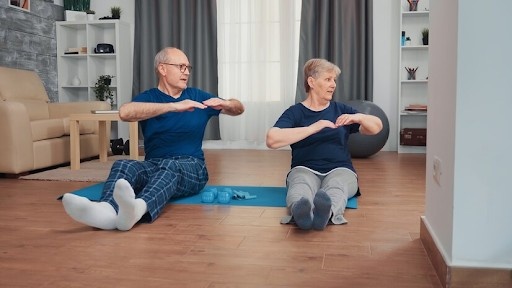
For beginners or if you are coming from injury, HIIT should be done together with geriatric physical therapy exercises. The following exercises are designed to strengthen the joints and help the body achieve proper balance necessary to undertake vigorous exercises.
What Exercises Are Best for Seniors?
Some exercises are different from other exercises especially for the older people. Below are a few examples of HIIT-friendly workouts for seniors:
Marching in Place with Intervals
- How to do it: Do a march in place exercise for 20 seconds, and then increase the intensity to 10 seconds. Repeat for 5 minutes.
- Why it’s great: Most suitable for new learners, this exercise has little to no effects on the joints.
Chair Squats
- How to do it: If you are using a strong chair, sit down on it, and then stand up for 30 seconds. Take a 15 second pause and continue the process.
- Why it’s great: Important in Building leg muscle strength and stability of the leg.
Wall Push-Ups
- How to do it: Take your distance to be as close to one arm’s length away from a wall. Stand with the hands flattened on the wall and move the body backward and forward. Do this for 20 seconds with only a 10 second interval.
- Why it’s great: Helps to build the upper body muscles without putting pressure on the joints.
Seated Marching
- How to do it: Stand and sit on a chair with an interval of some seconds, pull up knees as high as you can. Include arm movements to enhance the level of the whole workout.
- Why it’s great: Accessible for the elderly with restricted mobility.
Water-Based HIIT
- How to do it: Swim at a slow pace or do water jogging with short bursts of a high-intensity swim in a ratio of 3:1, for a period of 20-30 seconds.
Why it’s great: Eliminates stress on the joints while giving the entire body a good workout session.
Common Concerns About High-Intensity Workouts
“Am I Too Old for This?”
Absolutely not! As I mentioned, intensive exercises may be adjusted according to the level of discomfort that you feel. The big idea here is to know when your body has had enough and adapt to it appropriately.
“What If I Have Joint Pain?”
Take up activities that have little strain on your joints, muscles and bones such as water aerobics and cycling. These exercises are good and they do not have much impact on your joints.
“I’ve Never Done HIIT Before. How Do I Learn?”
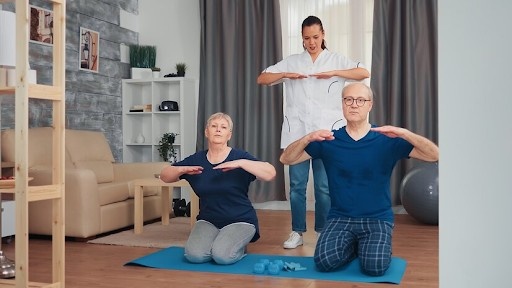
One should enroll in a senior exercise class, or find a personal trainer who has particular experience in training elderly. It shall explain to you the right form and intensity of exercising.
Tips for Staying Safe During High-Intensity Workouts
Warm-Up and Cool Down
Writing should also follow the same pattern: first, you should prepare the body and mind for any task, which should be done through warm up and the last that should be done is stretching.
Stay Hydrated
It is also important to avoid dehydration before, during and even after exercise.
Use Proper Equipment
Regardless of whether they are supportive shoes or resistance bands that are used, the appropriate equipment is safe and comfortable and friendly.
Know Your Limits
Intense does not mean exhaustion. Be aware of and respond to your physical requirements and be bored whenever it is necessary.
Can High-Intensity Workouts Be Fun?
Which states that workouts are boring? It is important to note that the majority of the seniors have expressed joy when performing HIIT, particularly in group sessions. And why not visit friends to test a workout for older guys or attend a senior exercise class? Incorporating workouts into a social aspect is much more fulfilling.
Success Stories: Seniors Thriving with High-Intensity Workouts
Learn from other older adults who have taken to high intensity exercising as their best form of exercising. Predictably, most people say they feel more energetic, happier, and much more enthusiastic to live. From a 70-year-old man mastering-chair squats to an 80-YR-Woman enjoying her water aerobics, these are true testament to the fact that age is nothing but a number!
Conclusion
High Intensity Workouts for Seniors are a blessing in maintaining their health and strength. If it is plausible you are a beginner, or wanting to transform your approach, the use of HIIT exercises to seniors, geriatric physical therapy exercises, or joining a senior exercise class might help.
So, what are you waiting for? Just put on your sneakers, fill a water bottle and begin this journey of fitness today. Don’t forget that regular readers always have the opportunity to change their lives and start leading an active lifestyle!
FAQs
What Are High-Intensity Workouts for Seniors?
Aerobic exercise to seniors is a series of activities involving moderate to high intensity exercise performed for a short duration, interrupted by brief periods of rest or activities of low intensity. These workouts also called HIIT (High-Intensity Interval Training) are geared towards the fitness capacity of seniors.
Are High-Intensity Workouts Safe for Seniors?
They are safe when administered rightly and when the administration is under medical supervision. Older patients should first see their physician and they undergo low impact workouts in most cases not involving their joints and muscles.
References